
Students at TU/e successfully test a liquid bi-propellant rocket engine

Team VOID
Student team
December 18, 2025
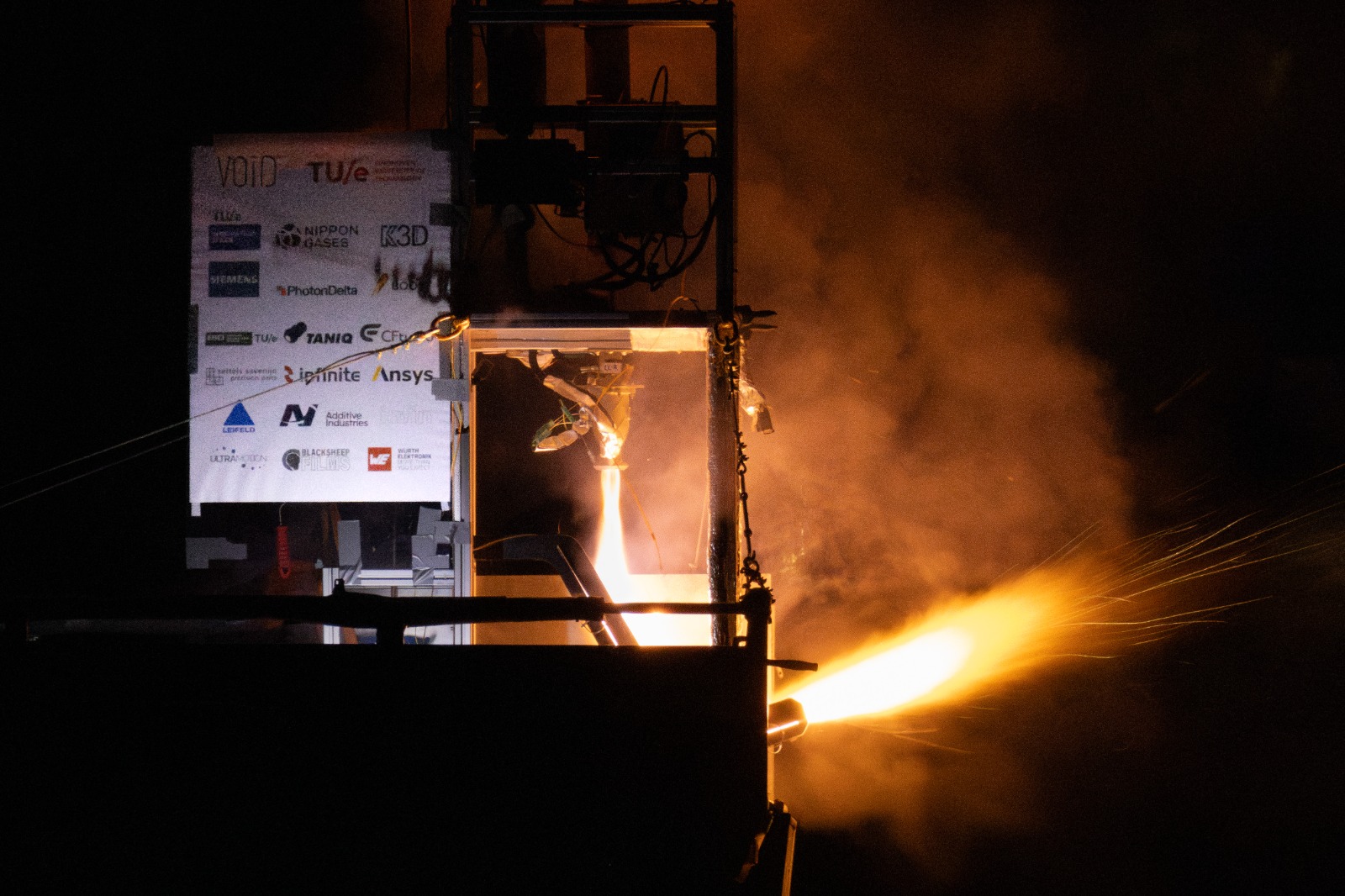
Student team VOID, from Eindhoven University of Technology, has successfully ignited and tested their NOVA-2 rocket engine. The test took place in early December 2025 and represents a major milestone for the team, particularly as success was achieved on the very first attempt.
A team of 45 students is working toward creating an infrastructure for reusable launch vehicles, which is the driving force behind their R&D of a custom rocket engine. Liquid rocket engines are complex systems: the combination of extreme combustion temperatures, a corrosive oxygen-rich environment, and specialized manufacturing techniques makes entering this field highly demanding. However, the rewards are substantial: liquid engines are reusable and allow for throttling (thrust adjustment), which is crucial for landing a rocket, specifically a VTVL (Vertical Takeoff, Vertical Landing) vehicle.
Background of the project
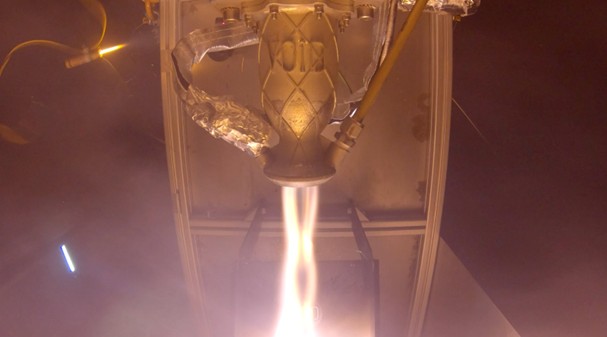
NOVA-2 is a 1.2kN bipropellant engine running on a mixture of ethanol and liquid oxygen. It employs a "regenerative cooling design", a key concept behind the project's reusability. Because the combustion reaction can produce temperatures exceeding 2500°C, well above the melting point of most steels, cooling is essential. The intricate geometry of NOVA-2 supplies pressurized ethanol to the bottom of the engine assembly. The fluid flows upward toward the injector plate, absorbing heat from the combustion chamber walls before being ignited. This "thermodynamic dance" prevents the inner walls from melting and ensures the engine remains reusable.
Team VOID is striving to participate in the 2026 edition of EuRoC, an annual competition in Portugal where student teams from across Europe compete in categories based on target altitude and propulsion methods. VOID has opted to compete in the 3,000m flight, powered by liquid engine. EuRoC serves as a stepping stone for the team to develop their first IGNIS rocket, which features the NOVA-2 engine. Project “Jackalope” is the current long-term goal for the team, it’s a so-called hopper, a VTVL vehicle meant to perform 30-meter hops and propulsively land back to its starting location. This system uses TVC, or thrust vector control, where the liquid nature of NOVA-2 comes into play. A system of linear actuators and extensive control mechanisms are adjusting the direction of the thrust vector, allowing “Jackalope” to perform various maneuvers in air.
Test Day
The past month was incredibly busy for the team, with all resources dedicated to preparing for the first static fire. On the testing day it took a plethora of checklists, pre-test routines, and a crew of 15 people to finally achieve the sought-after results. The operation was highly professional: every member knew exactly where to be and what to do, utilizing two-way radio communication and following all safety precautions. Ultimately, the proprietary ground test stand registered a thrust equivalent to 100kg.
Future Plans
This static fire marks the beginning of a long-term testing campaign for various iterations of the NOVA-2 platform. The ultimate goal is project "Jackalope”, but first the team has to go through the EuRoC competition and use the accumulated expertise to create the aforementioned VTVL. This is a significant achievement for team VOID and TU/e, as a feat of this nature has never been accomplished at the university before.